
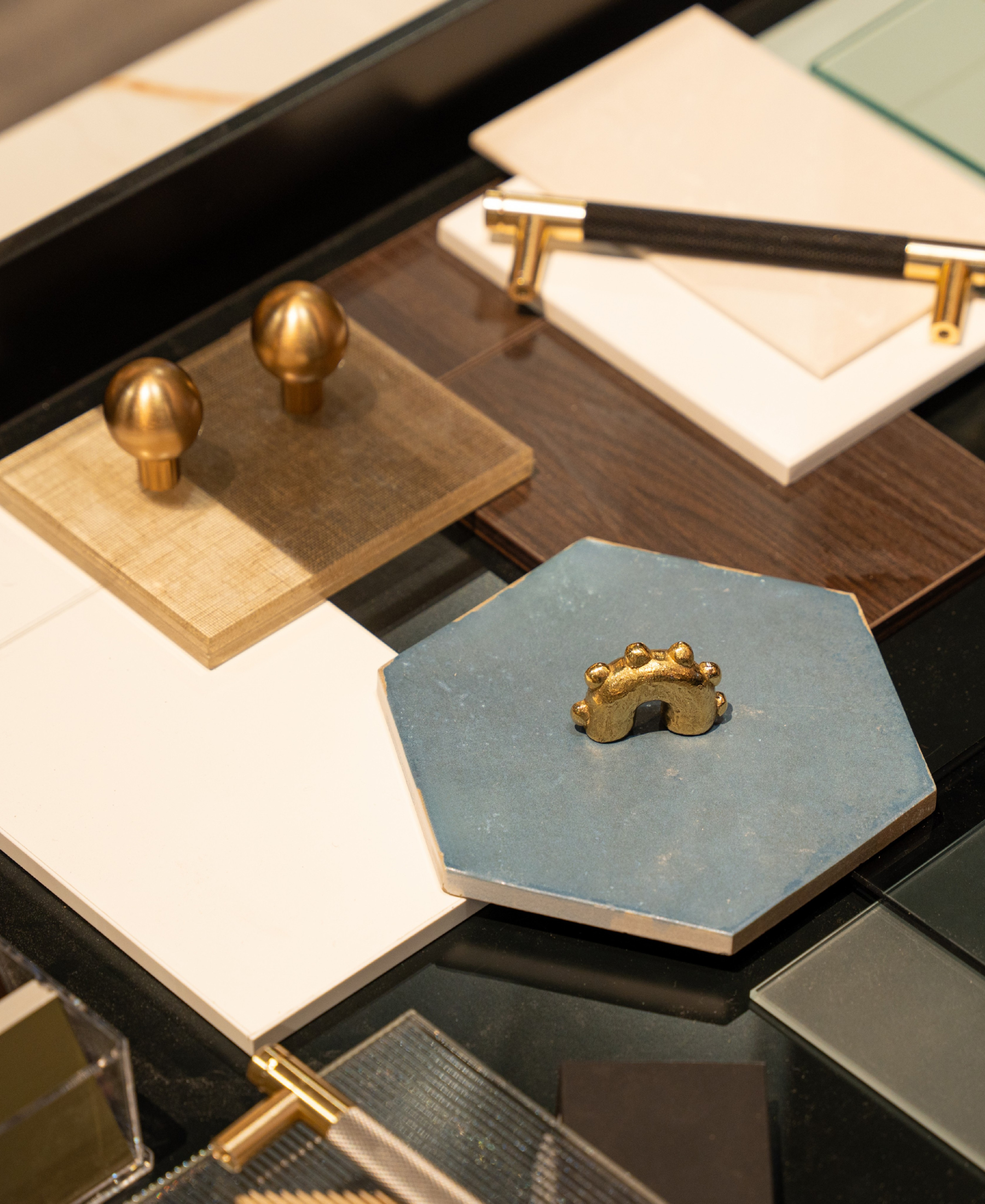
KBIS 2026 confirmed what we anticipated heading into Orlando: design is becoming more expressive, more tactile, and more intelligently integrated — while prioritizing emotional connection and everyday performance.
Across booths and launches, we experienced a thoughtful evolution taking place. The industry is embracing greater intentionality in how materials, color, form, and technology come together to support the way people truly live.
Here are the seven shifts that defined the show floor — and why they matter for designers moving forward.
1. Leaning Into Color: Confident. Saturated. Intentional.
Color stepped into a leading role this year. Designers moved beyond cautious neutrals into layered, saturated palettes applied with maturity and restraint. Tonal kitchens, deep cabinetry hues, matte finishes, and rich jewel tones grounded by earthy undertones were everywhere. Color felt architectural — fully integrated across cabinetry, stone, and surfaces — shaping the room rather than decorating it.
What We Saw
Purple and orange cabinetry anchoring full kitchen environments with surprising sophistication
Tonal drenching across cabinetry and stone
Matte finishes amplifying depth and richness
Jewel tones paired with grounding earth hues
Expanded bold finish offerings across multiple brands
Why It Matters? Clients are increasingly open to depth and dimension in their homes, and they are looking to designers to guide that expression thoughtfully. Color has become a strategic design tool — one that communicates identity and elevates the entire environment when applied cohesively.
We are entering an era of grown-up color. The designers who lead will be those who balance saturation with sophistication.
2. Wellness, Elevated: Whole-Home Restoration
The wellness conversation is continuing to mature into performance-driven whole-home design.
Hydrotherapy systems, steam integration, chromatherapy, concealed ventilation, circadian lighting, intuitive appliances and sculptural soaking tubs designed for recovery all reflected this shift. The features we know and love from restorative bath spaces are becoming increasingly common throughout the home – bringing solutions that actively support restoration and longevity.
What We Saw
Chromatherapy and circadian lighting
JennAir’s Induction Downdraft reinventing the cooking experience
Sculptural tubs designed for recovery
Why It Matters? Longevity and mental well-being are influencing how clients prioritize their homes. Designers are increasingly tasked with creating environments that contribute meaningfully to physical and emotional health.
The future of luxury will be defined by restoration, not scale.
3. The Softening of Solid Surfaces: Durability with a Gentle Hand
Performance materials are evolving into more inviting and tactile sculptural expressions. From honed countertops and rounded millwork to eased countertop edges, curved islands, and matte finishes that invite touch – this signals that luxury is becoming increasingly sensory.
What We Saw
Softened transitional cabinetry interpretations
Curved island edges and eased thresholds
Sculptural countertop profiles
Matte and suede-like surfaces that invite touch Cosentino’s new Eclos Collection and Dekton colorways
Why It Matters? Softened forms enhance circulation, support multi-generational living, and create environments that feel welcoming and intuitive. Clients may not always articulate why a space feels good — but thoughtful geometry and tactile materials are often the reason.
High-performance materials are at their best when they also feel human.
4. The Return of the Reimagined Shaker
Shaker cabinetry made a strong return, interpreted with slimmer proportions and architectural refinement. Ultra-slim rails and stiles, softened edges, and mixed door styles within the same kitchen created fresh rhythm and contrast.
The effect felt timeless and grounded.
What We Saw
Narrow-framed Shaker doors paired with slab islands
Mixed door styles within a single space
Transitional detailing integrated into modern environments
Why It Matters? Shaker endures because it provides structure without heaviness and familiarity without excess ornament. It adapts effortlessly to evolving palettes and material trends while maintaining architectural rhythm.
The refined Shaker profile feels layered and enduring, offering contrast and balance within expressive spaces.
5. A Celebration of Curves
Curvature appeared across nearly every category — from arched passageways and rounded islands to sculptural soaking tubs and hardware. These forms guide movement and shape experience; influencing spatial flow in meaningful ways.
What We Saw
Arched openings and passageways
Curved island bases and waterfall edges
Rounded mirrors and vanity profiles
Why It Matters? As homes continue to embrace open layouts and multifunctional living, curvature introduces subtle zoning and visual softness. It enhances both flow and emotional comfort while maintaining architectural clarity.
Curves are redefining modern architecture through balance, rhythm, and spatial intelligence.
6. Integrated Intelligence: Technology Within the Architecture
Smart home innovation continues to advance, with systems becoming seamlessly embedded into cabinetry and appliances. Integrated charging drawers such as Fabuwood x FreePower’s InFocus Drawer, advanced downdraft induction from JennAir, concealed ventilation, and embedded lighting solutions from Top Knobs demonstrated how technology now supports design without interrupting it.
What We Saw
Integrated charging drawers
Advanced downdraft induction with concealed ventilation solutions
Why It Matters? Clients expect convenience and performance, yet they value visual clarity. Integrating intelligence directly into the architecture allows designers to maintain aesthetic purity while enhancing daily functionality.
The most sophisticated technology feels intuitive and effortless.
7. Beacons of Joy: Personality with Precision
Throughout the show, we saw refined spaces punctuated by intentional moments of personality. Hardware treated like jewelry. Sculptural plumbing silhouettes. Lighting installations that functioned as art. Freestanding tubs that felt like statement pieces. These details brought individuality into otherwise streamlined environments.
What We Saw
Decorative hardware used as focal points
Sculptural sinks and freestanding tubs
Expressive plumbing profiles
Lighting installations designed as statement features
Personality-forward detailing layered into minimal spaces
Why It Matters? Today’s clients want spaces that feel distinctly theirs. These focal elements become anchors — in photography, in storytelling, and in daily experience. Emotional resonance has become one of the defining qualities of premium design.
Every space benefits from at least one intentional moment that reflects personality and joy.
Final Reflection: The Humanization of Modern Design
Across all seven shifts, a unifying theme emerged.
Design is expanding in depth and expression. Materials are becoming more tactile. Technology is integrating more seamlessly. Spaces are supporting how people feel, function, and restore within their homes. The evolution we witnessed at KBIS 2026 reflects a more thoughtful and human-centered direction — one that honors beauty, performance, and emotional connection in equal measure.
And that is a direction we are excited to continue designing toward.
