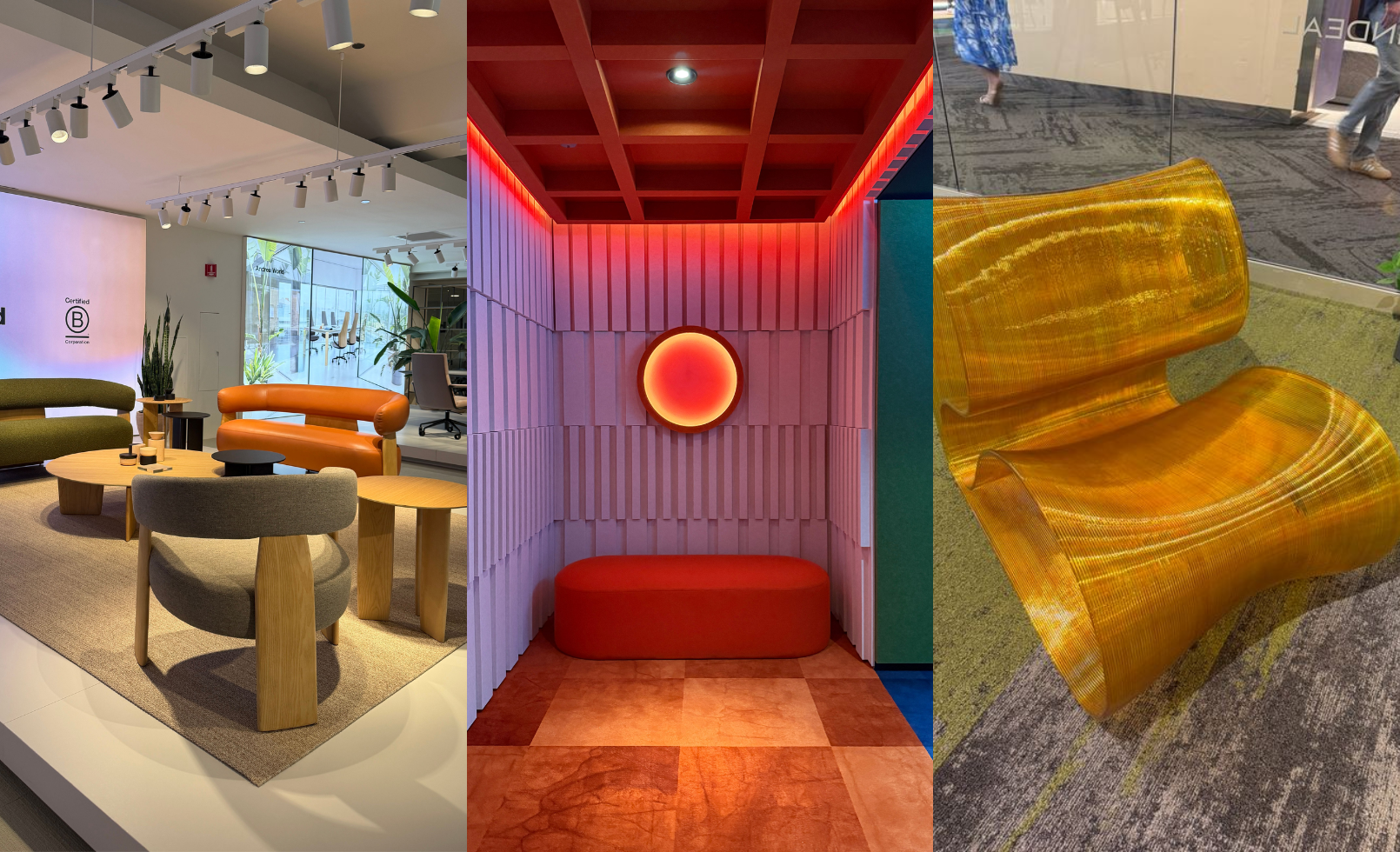
Chicago once again proved why NeoCon remains one of the most important gatherings in commercial design. From sensory-conscious lighting and responsive workplace solutions to artist-driven textiles and material innovations, this year’s show demonstrated that great design is increasingly focused on creating meaningful experiences for everyone.
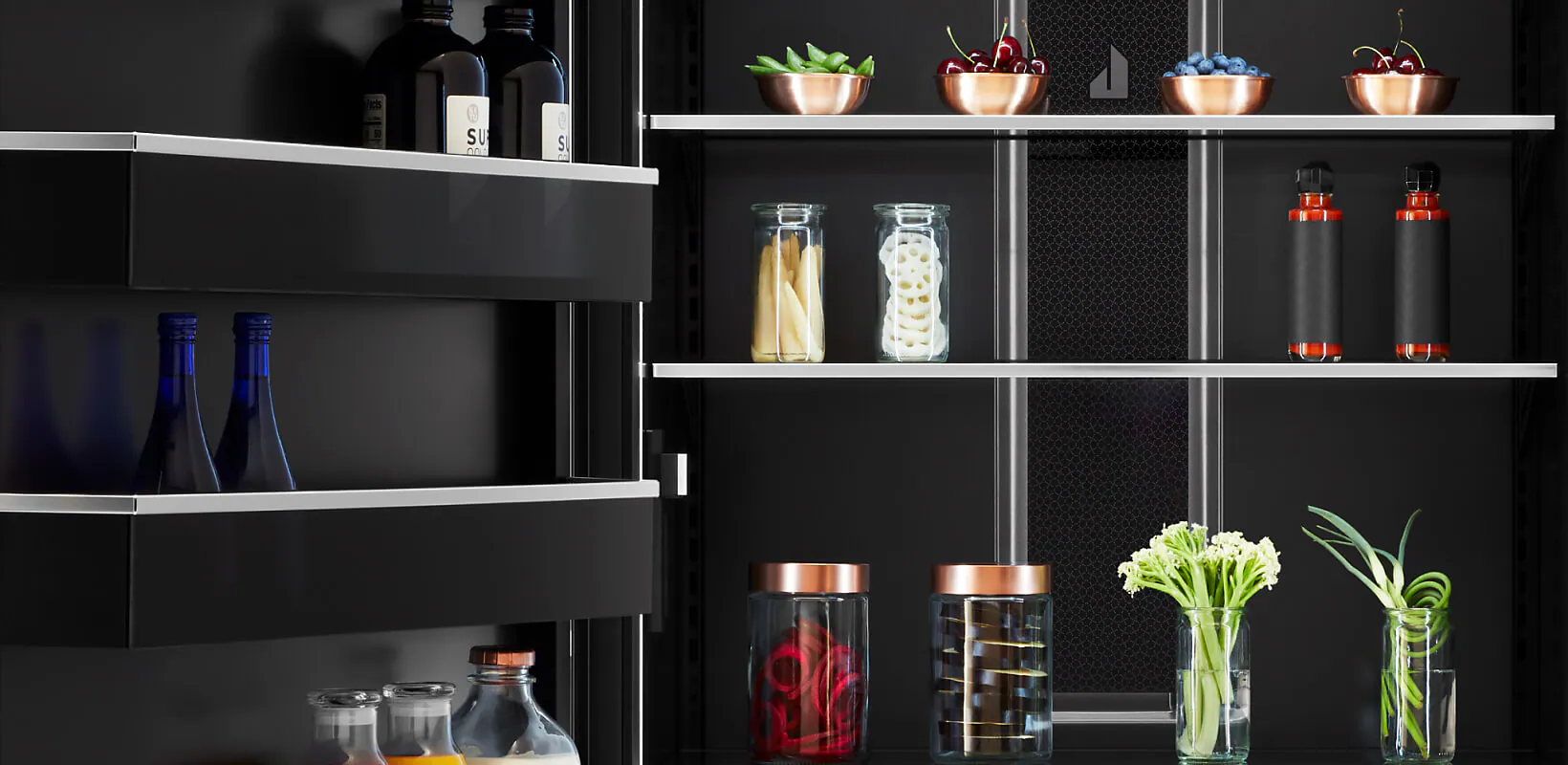
While I was in town celebrating the launch of the new JennAir x Dekton collaboration at the World of Whirlpool, I spent time exploring the showrooms, installations, and product introductions shaping the future of commercial and residential interiors. Here are five themes that stood out.
01. Lighting for Every Neurotype
Perhaps the most encouraging trend at NeoCon was the growing focus on sensory-sensitive lighting.
For years, lighting design has prioritized aesthetics and energy efficiency. Today, designers and manufacturers are taking a more holistic approach by recognizing how light affects mood, focus, productivity, and overall well-being.
Thoughtfully designed lighting schemes can create environments that support a broad spectrum of neurotypes, helping everyone feel more comfortable and engaged—from home offices and hospitality spaces to corporate workplaces and healthcare settings.
Among my favorites:
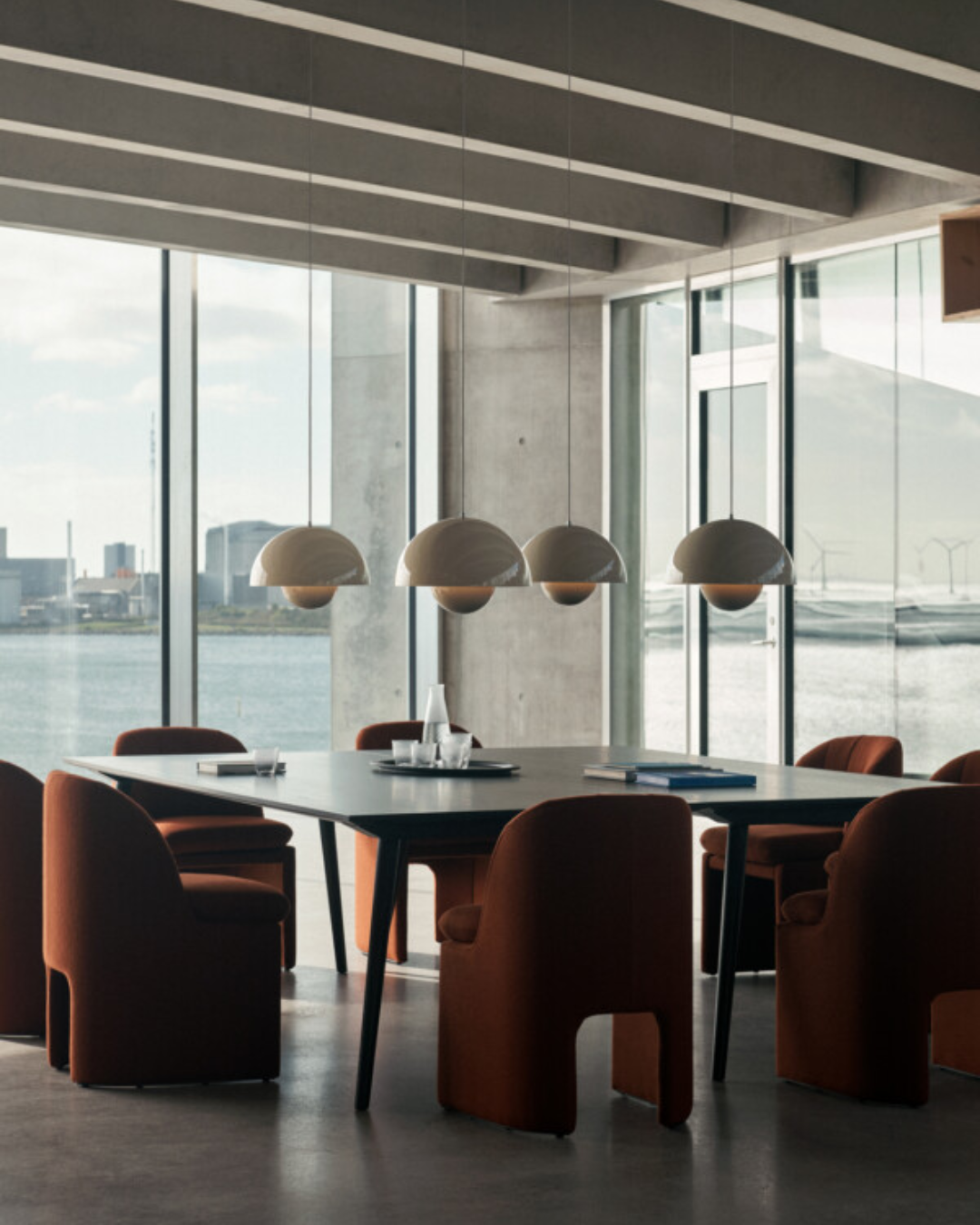
Verner Panton Flowerpot Reissue by &Tradition A timeless classic that delivers soft, comfortable illumination while reminding us that good design never goes out of style.
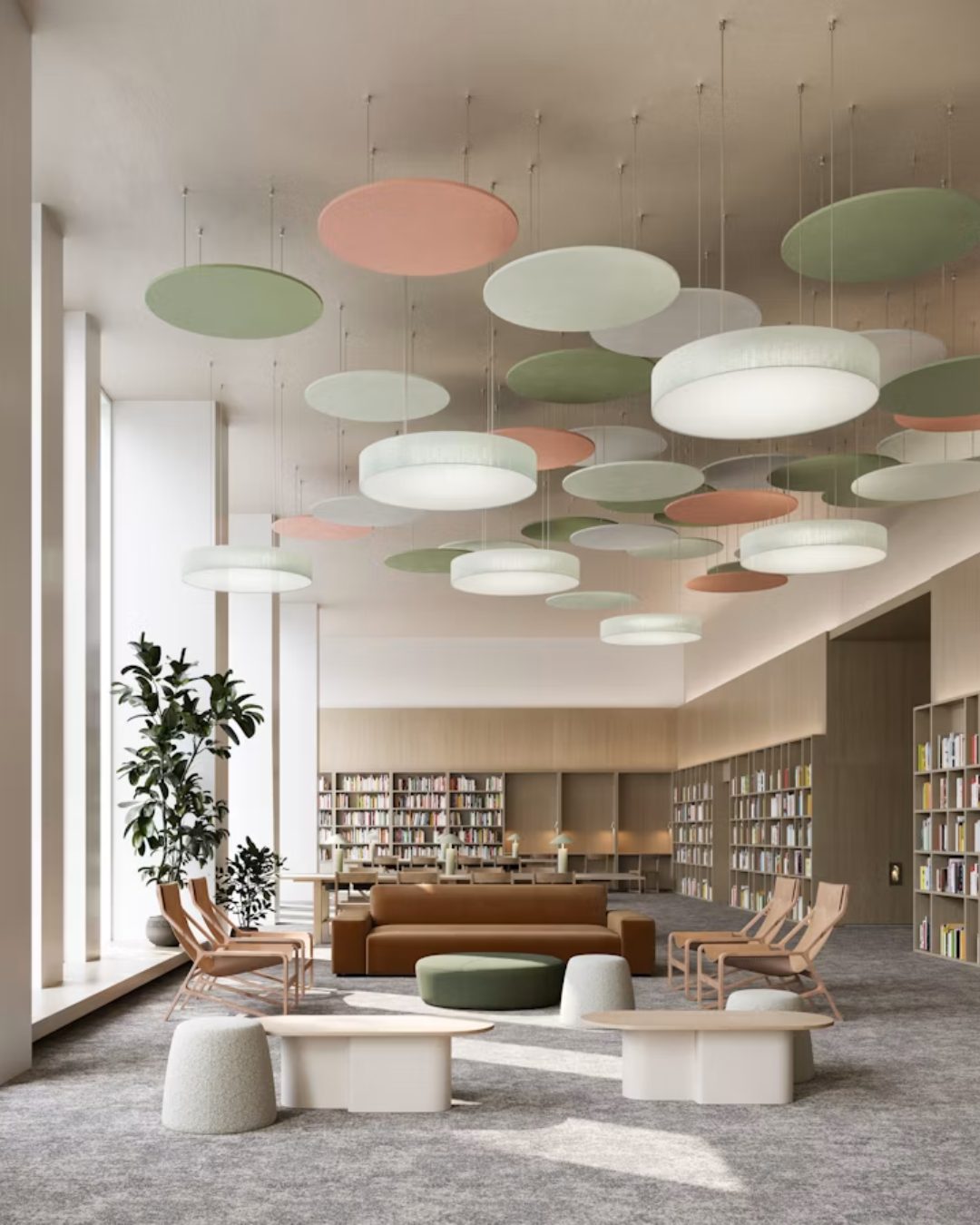
Cloudform by LightArt Organic forms and diffused light create a calming presence that softens large commercial spaces.
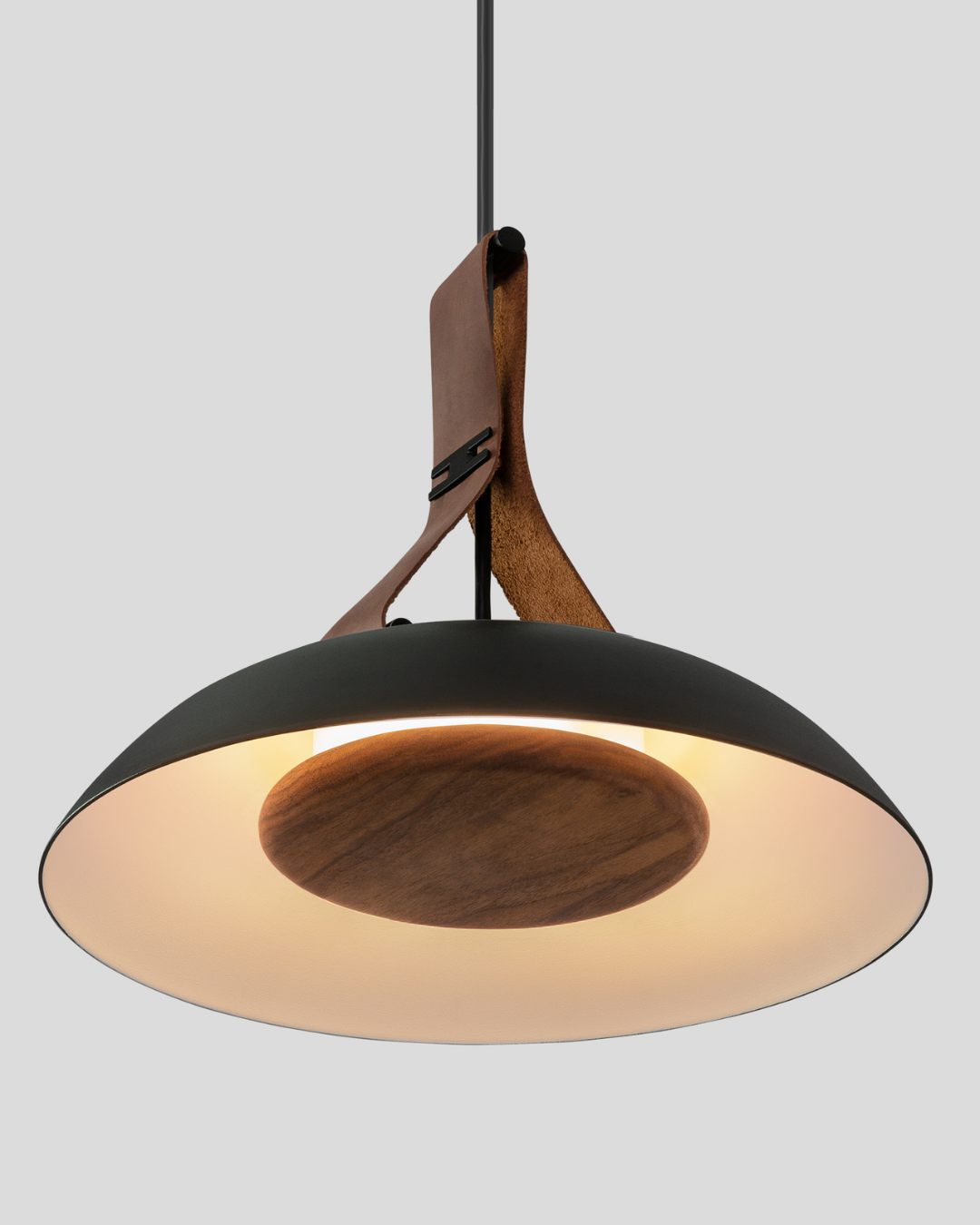
Volo Pendant by Cerno Lighting Elegant and sculptural, offering visual interest without overwhelming the surrounding environment.
Intelligent Lighting by Lutron Perhaps one of the most impactful innovations, adaptive lighting systems allow users and organizations to tailor lighting conditions throughout the day to support circadian rhythms, productivity, and wellness.
As our understanding of neurodiversity continues to evolve, lighting is becoming one of the most powerful tools designers have to create spaces that work for everyone.
02. The Responsive Workplace Has Arrived
The conversation around workplace design continues to evolve. With return-to-office mandates colliding with hybrid work expectations, organizations are rethinking how office environments support collaboration, focus, flexibility, and employee well-being.

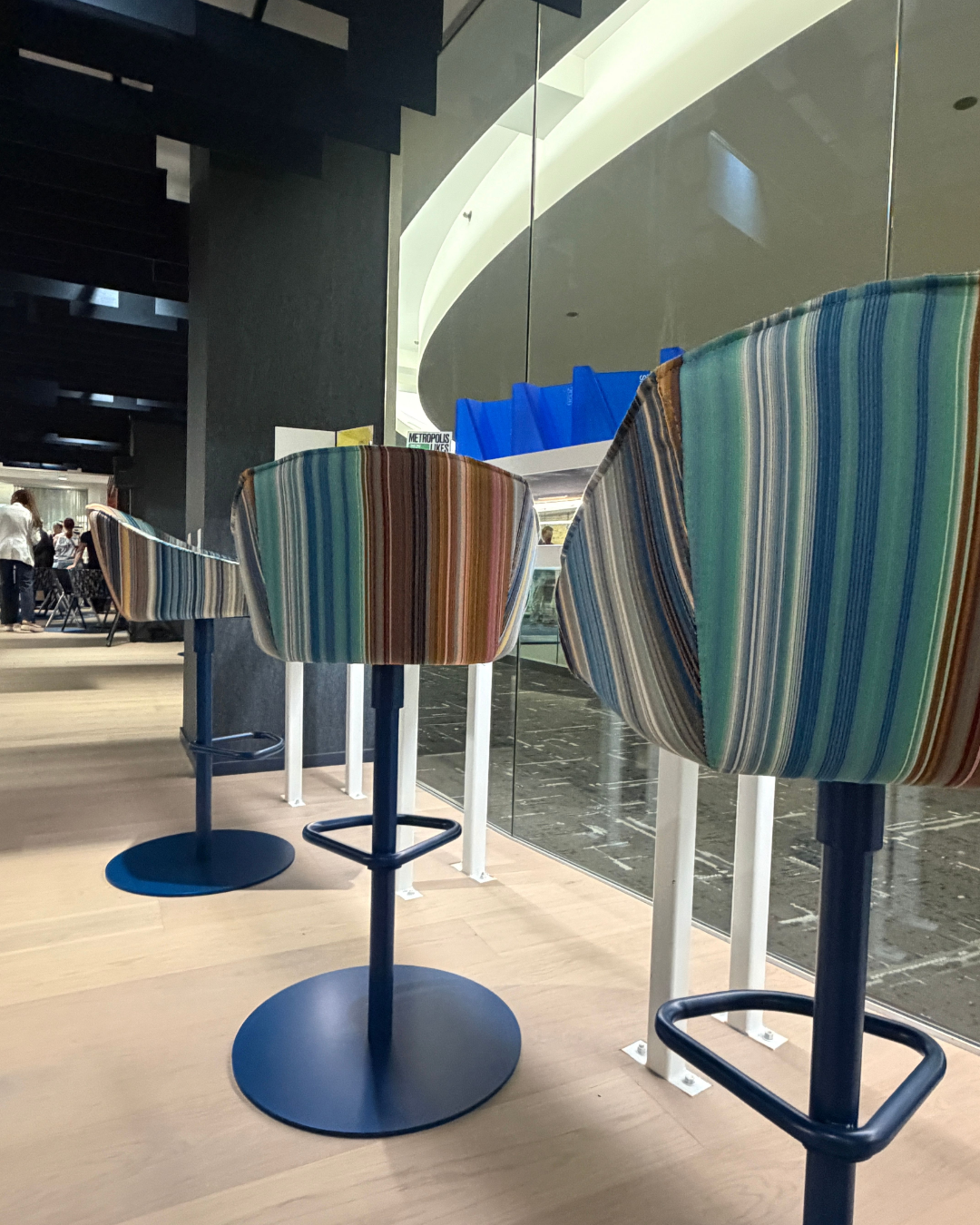
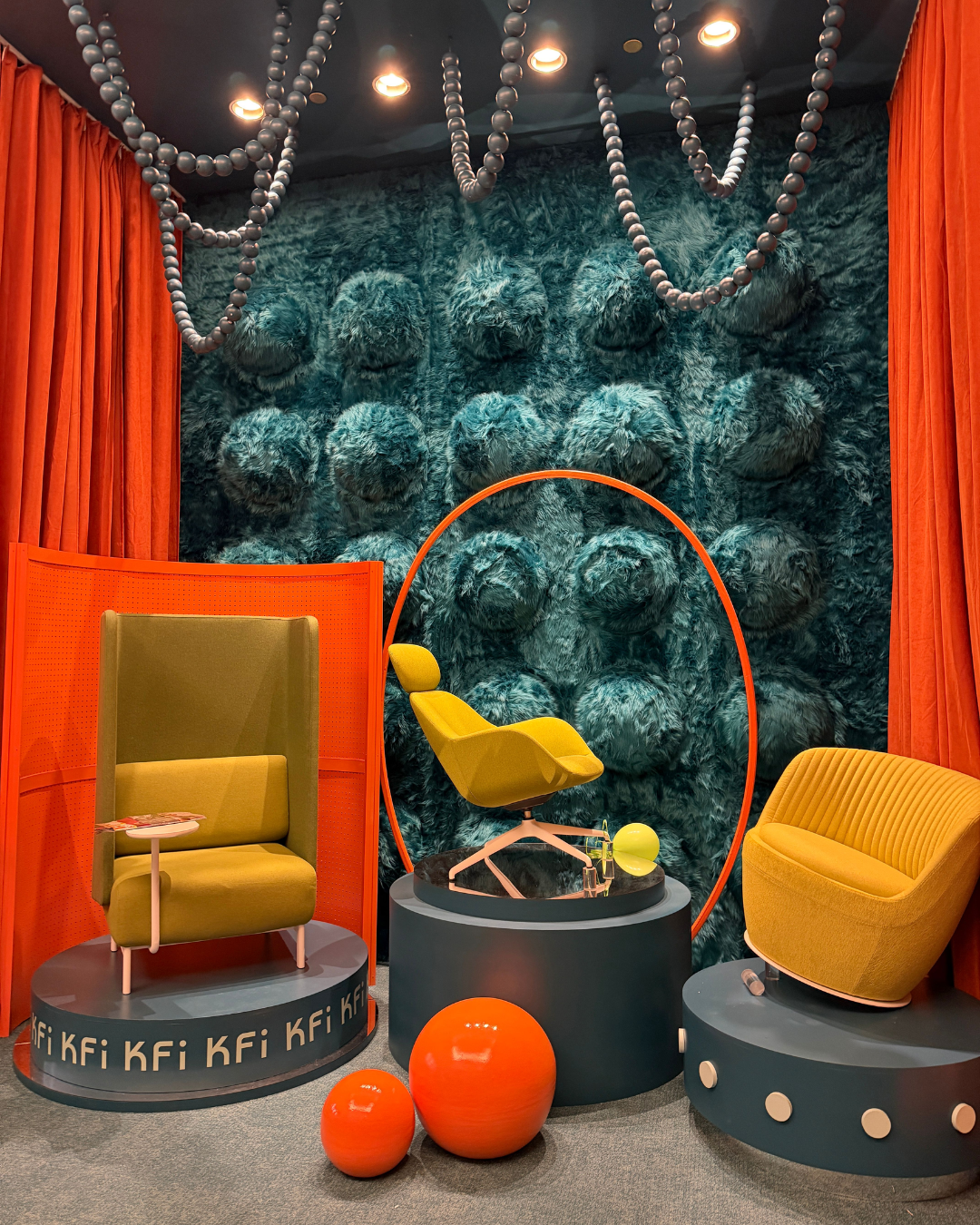
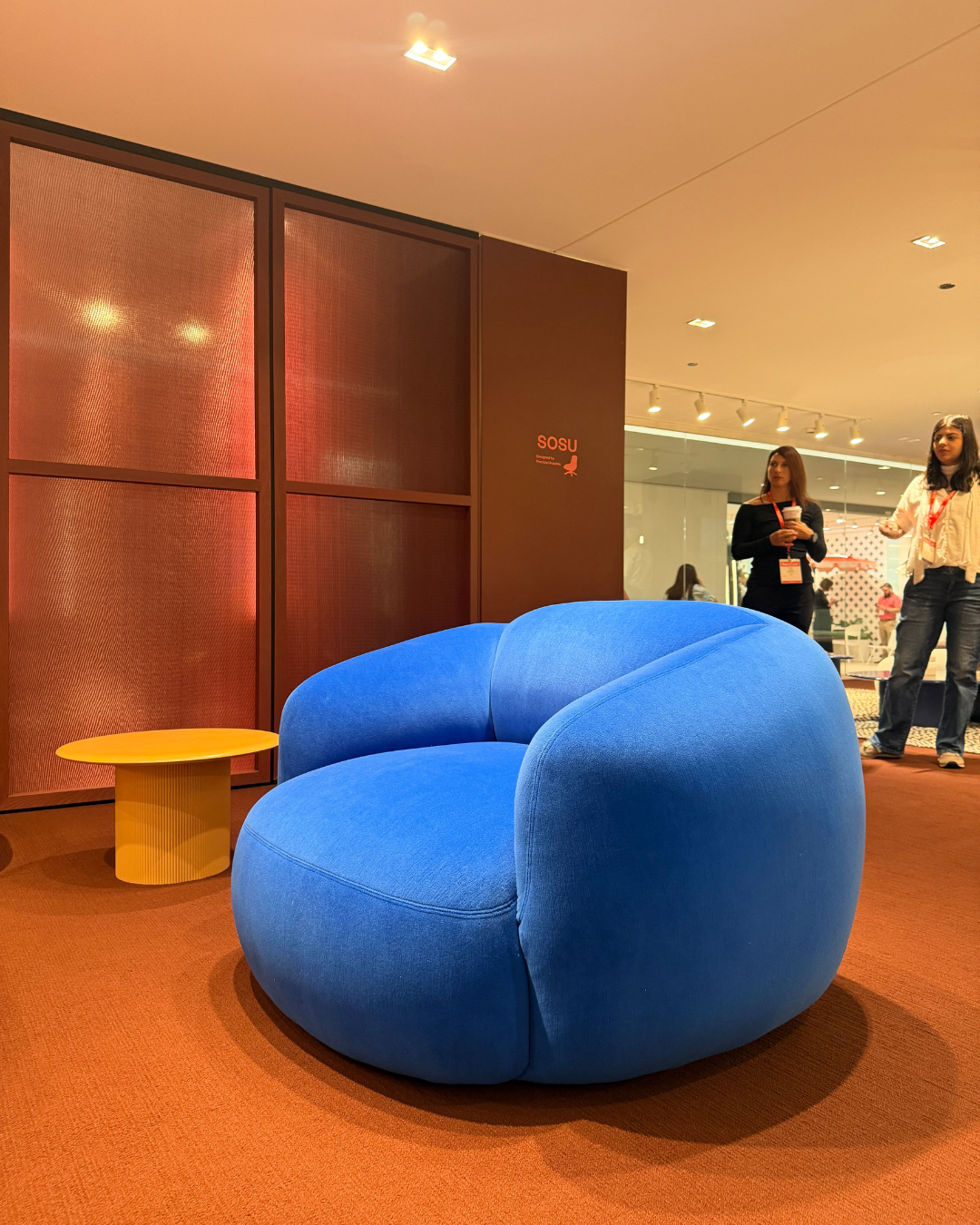
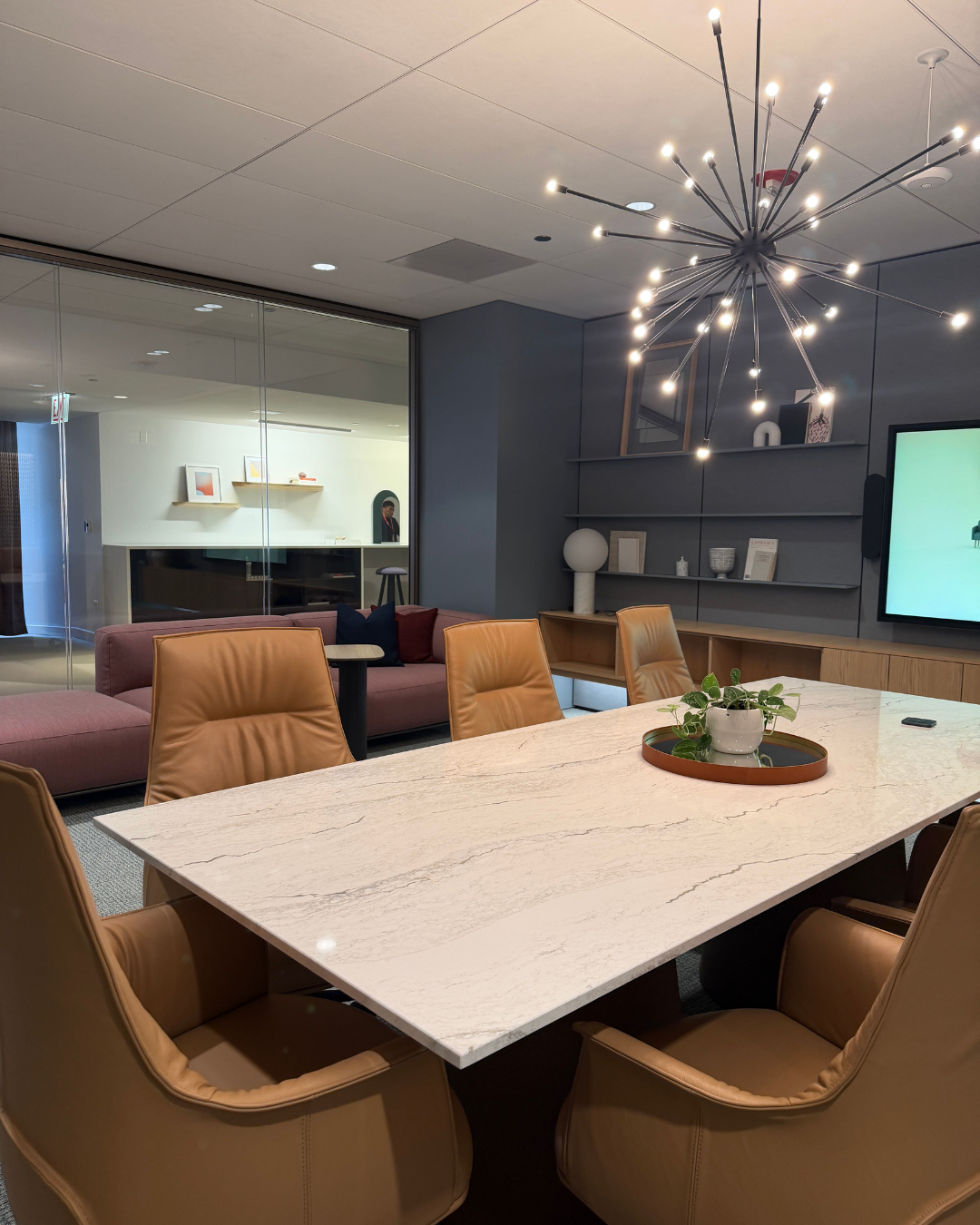
Forward-thinking manufacturers are responding accordingly:
At Bernhardt, residential comfort seamlessly merged with commercial performance, creating environments that felt less corporate and more human-centered.
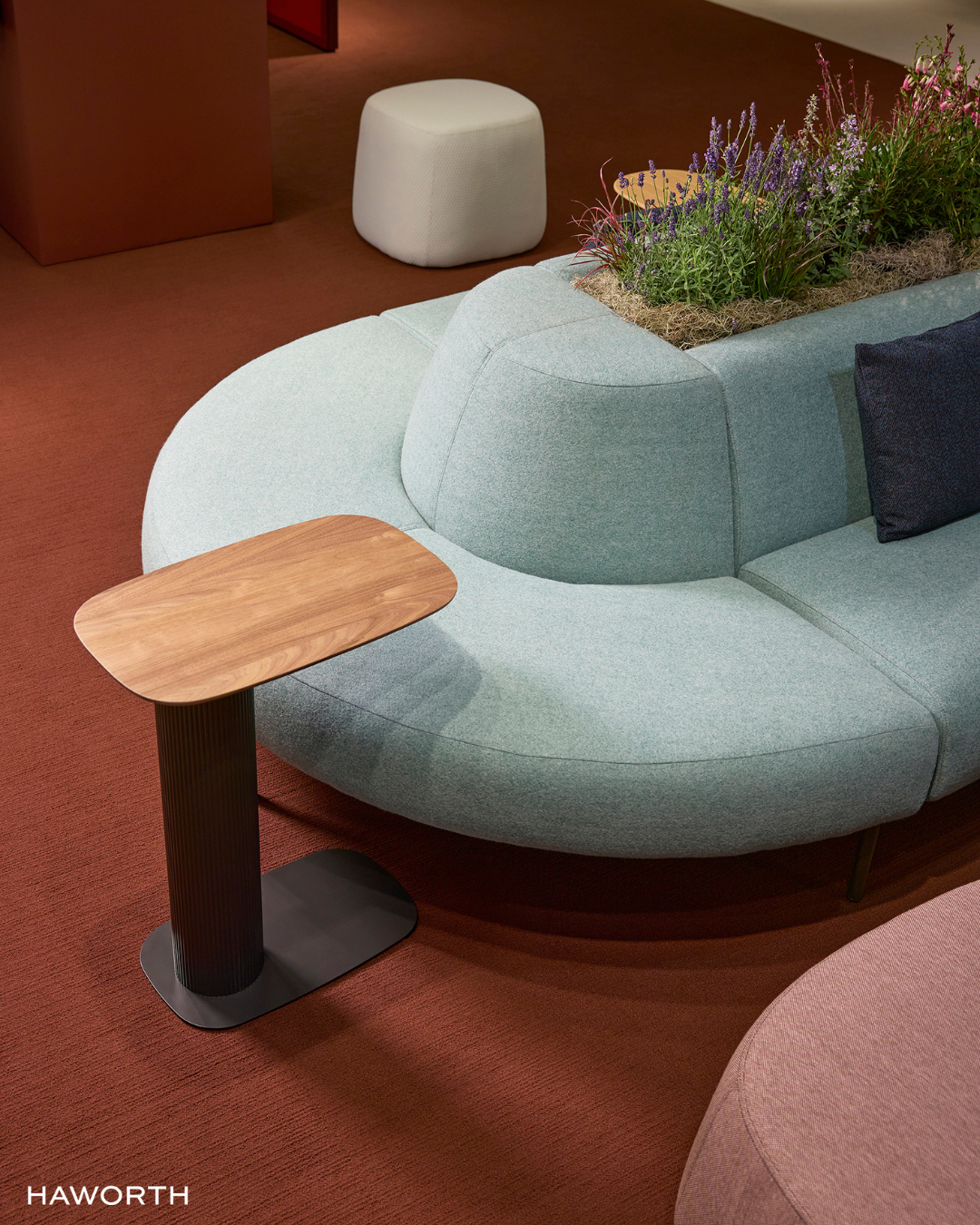
Haworth showcased adaptable workplace solutions that support multiple work styles throughout the day, from focused individual tasks to team collaboration.
Andreu World continued to demonstrate how sustainability, craftsmanship, and flexibility can coexist within contemporary workplace design.
Meanwhile, Momentum highlighted solutions that address both functionality and emotional connection, reminding us that workplaces should inspire, not simply accommodate.
The office of the future is no longer a place employees are required to go. It is a destination designed to support how people work best.
03. Artists Are Bringing New Rhythm to Commercial Interiors
One of the most exciting developments throughout NeoCon was the growing collaboration between artists and manufacturers. These partnerships are producing textiles, wallcoverings, and surface materials that tell stories, celebrate culture, and create deeper emotional connections within commercial spaces.
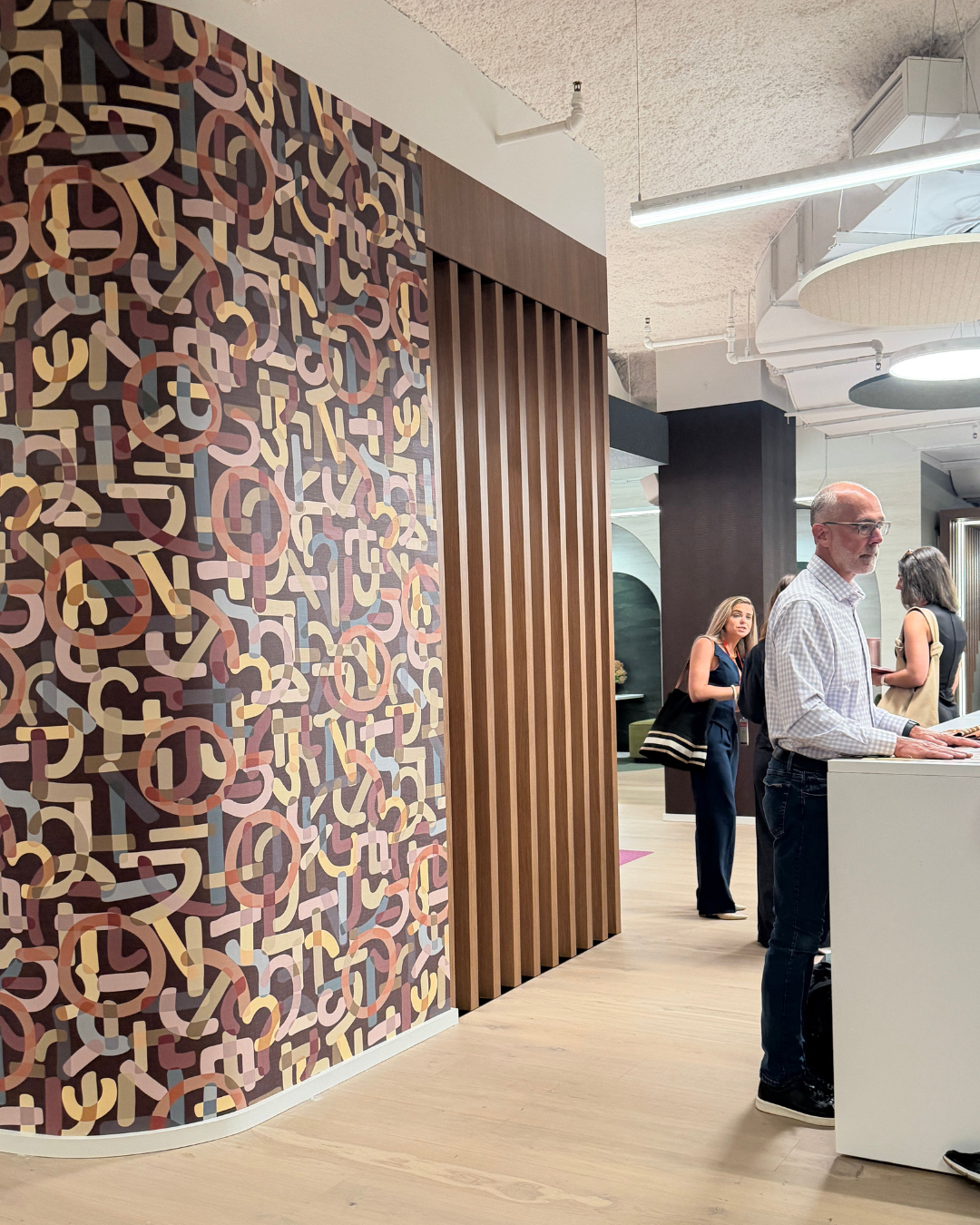
A standout was the Momentum x Michael Ford Collection, which draws inspiration from hip-hop culture and translates its rhythm, energy, and influence into sophisticated commercial applications. The collection’s Circon Wallcovering, available in six colorways, demonstrates how cultural storytelling can become an integral part of interior design rather than simply decoration.
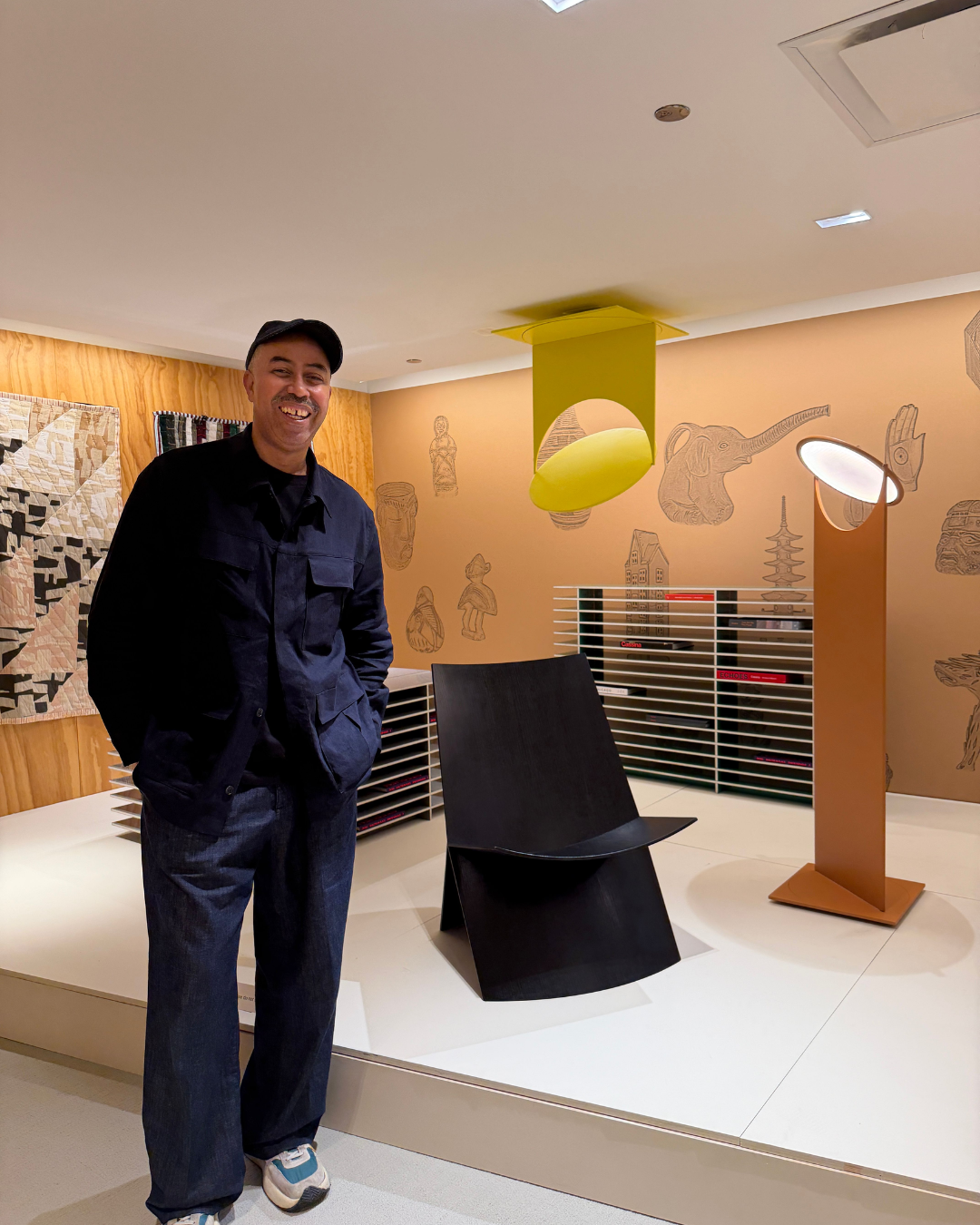
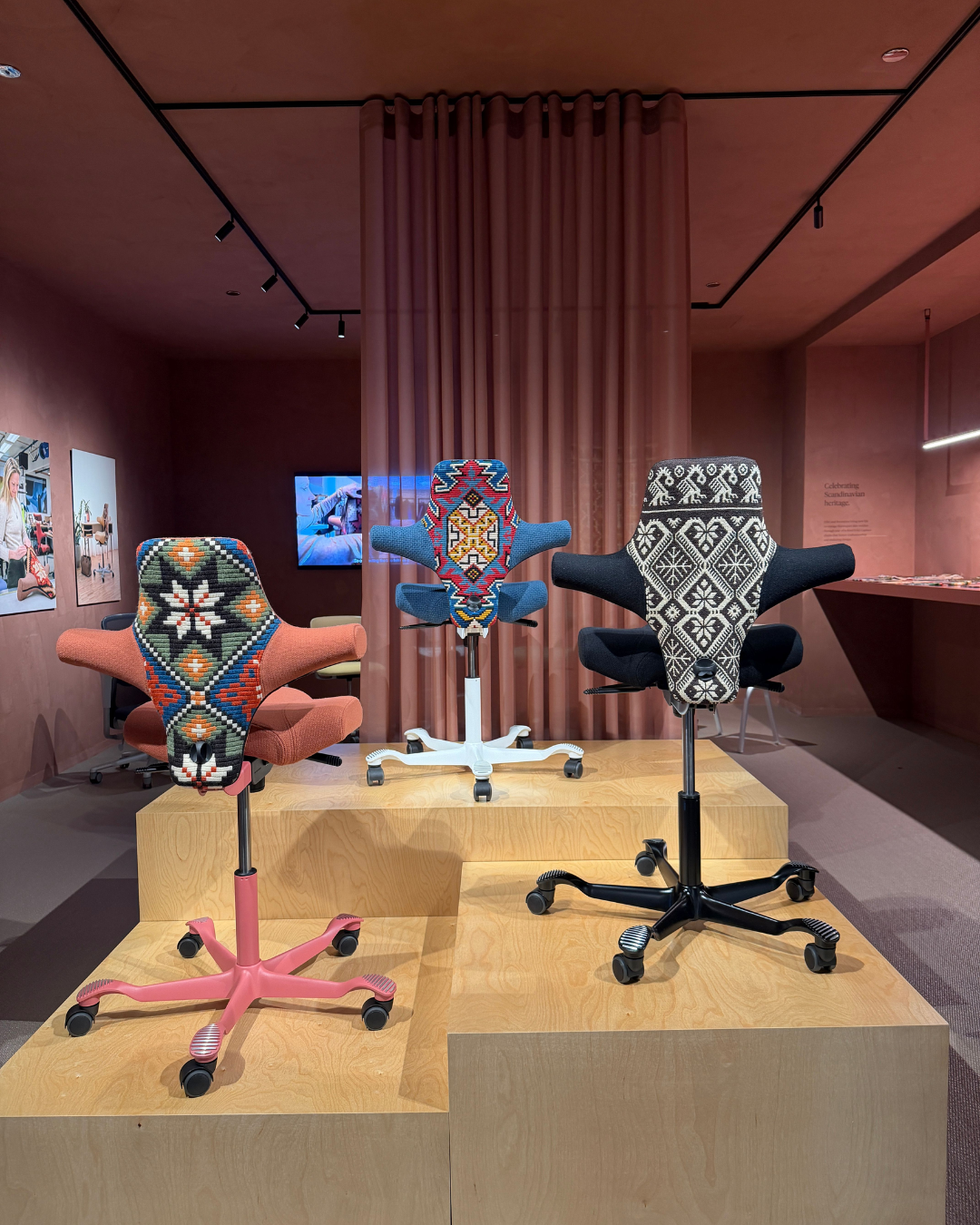
At Haworth, designer Stephen Burks Man Made brought a similarly thoughtful perspective through tapestries and wallcoverings inspired by nomadic traditions and handcrafted techniques from around the world.
These collections remind us that design is often at its best when it reflects the diversity of human experience.
04. Acoustics Have Become Design Features
Gone are the days when acoustical materials were hidden necessities.
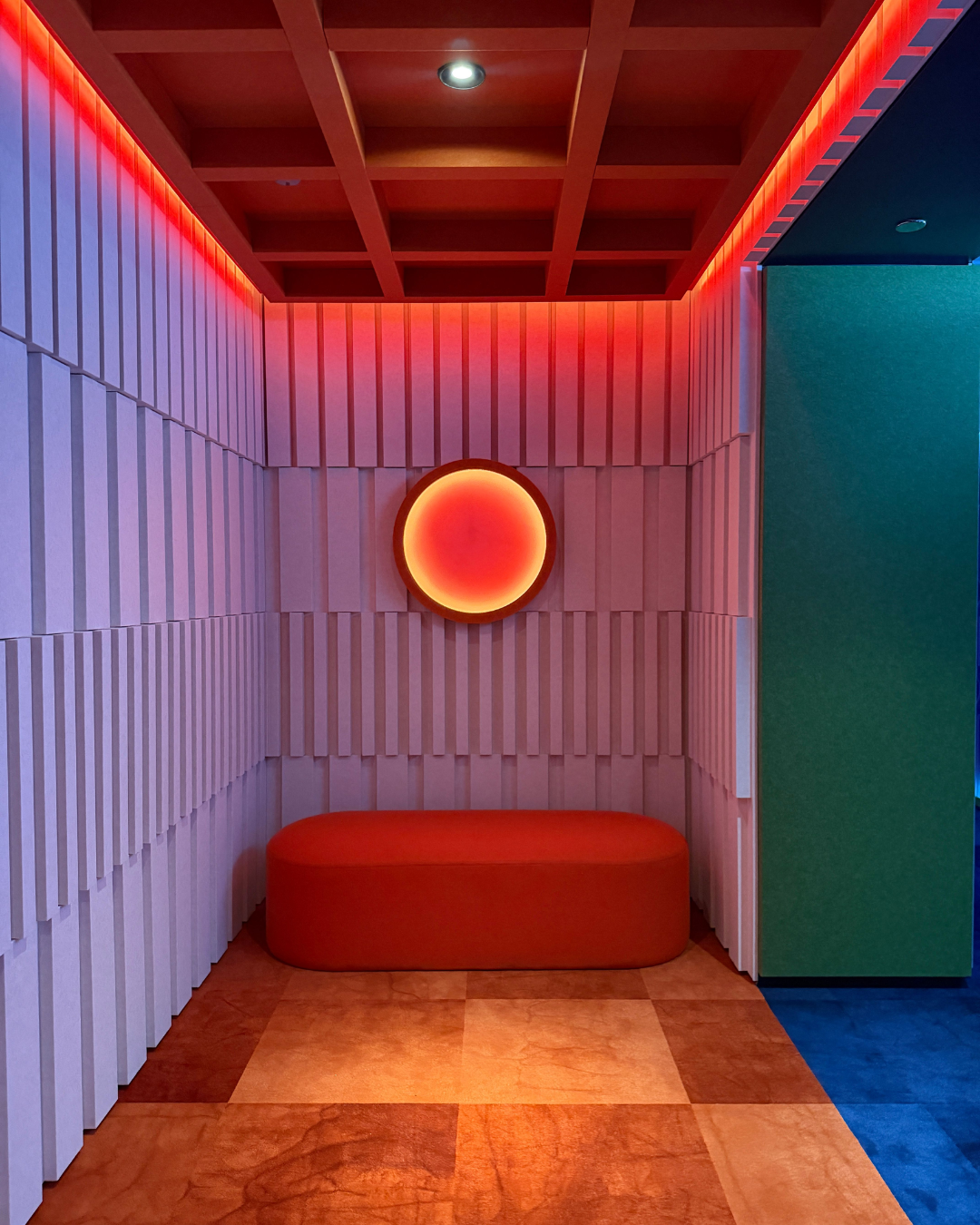
Today’s acoustical products are becoming some of the most visually compelling elements within commercial interiors. Manufacturers are transforming sound management into opportunities for expression through color, texture, dimension, and sculptural form.
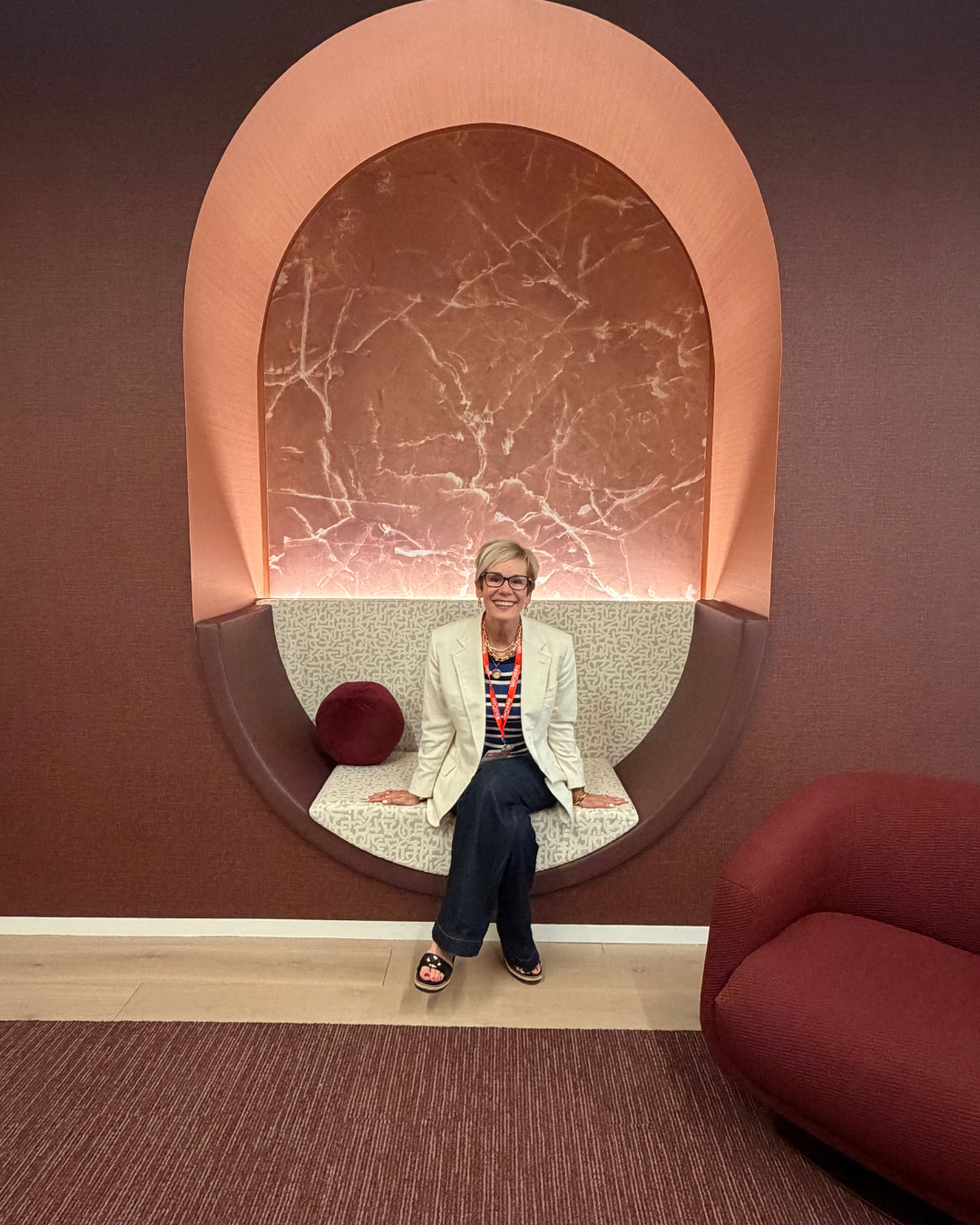
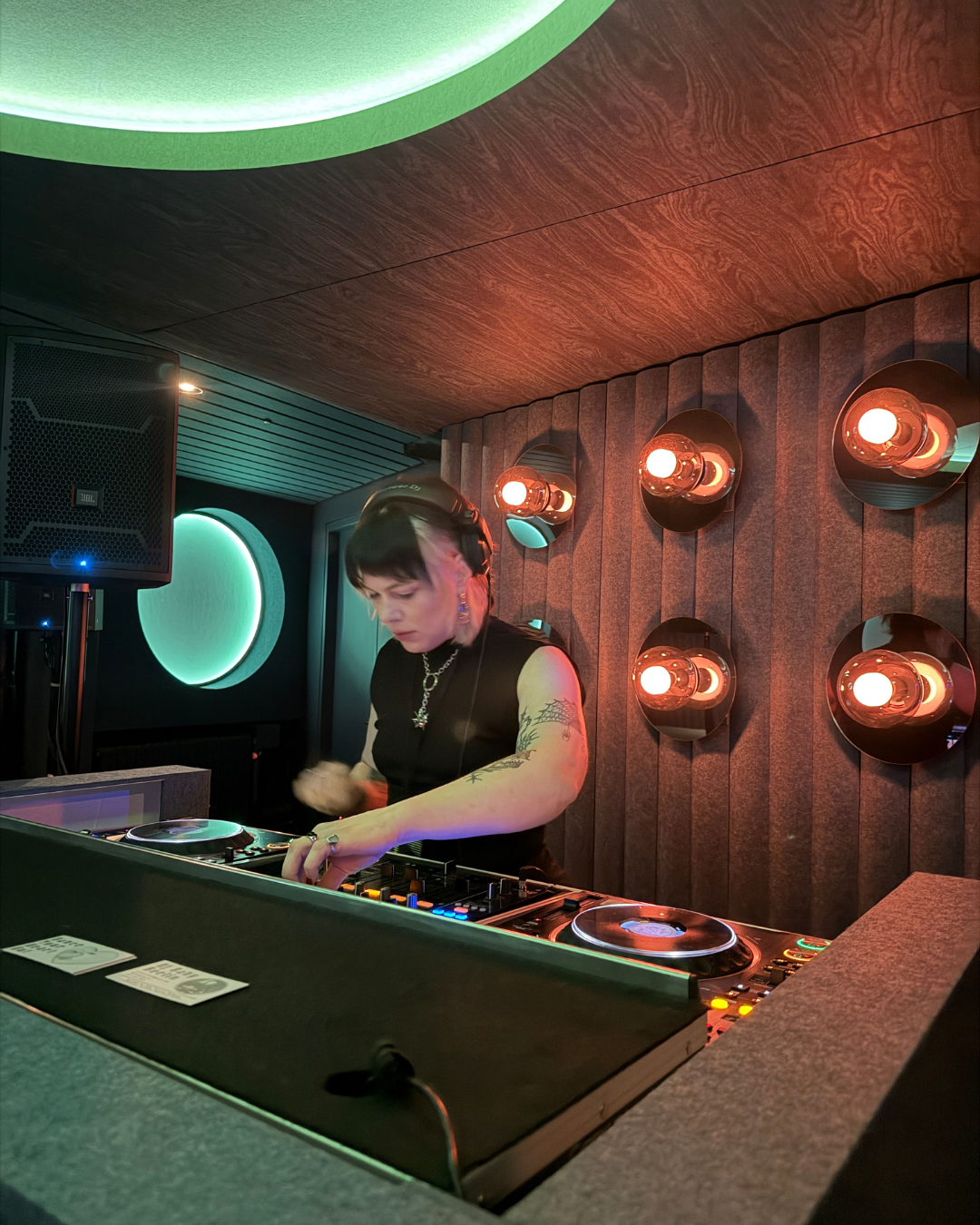

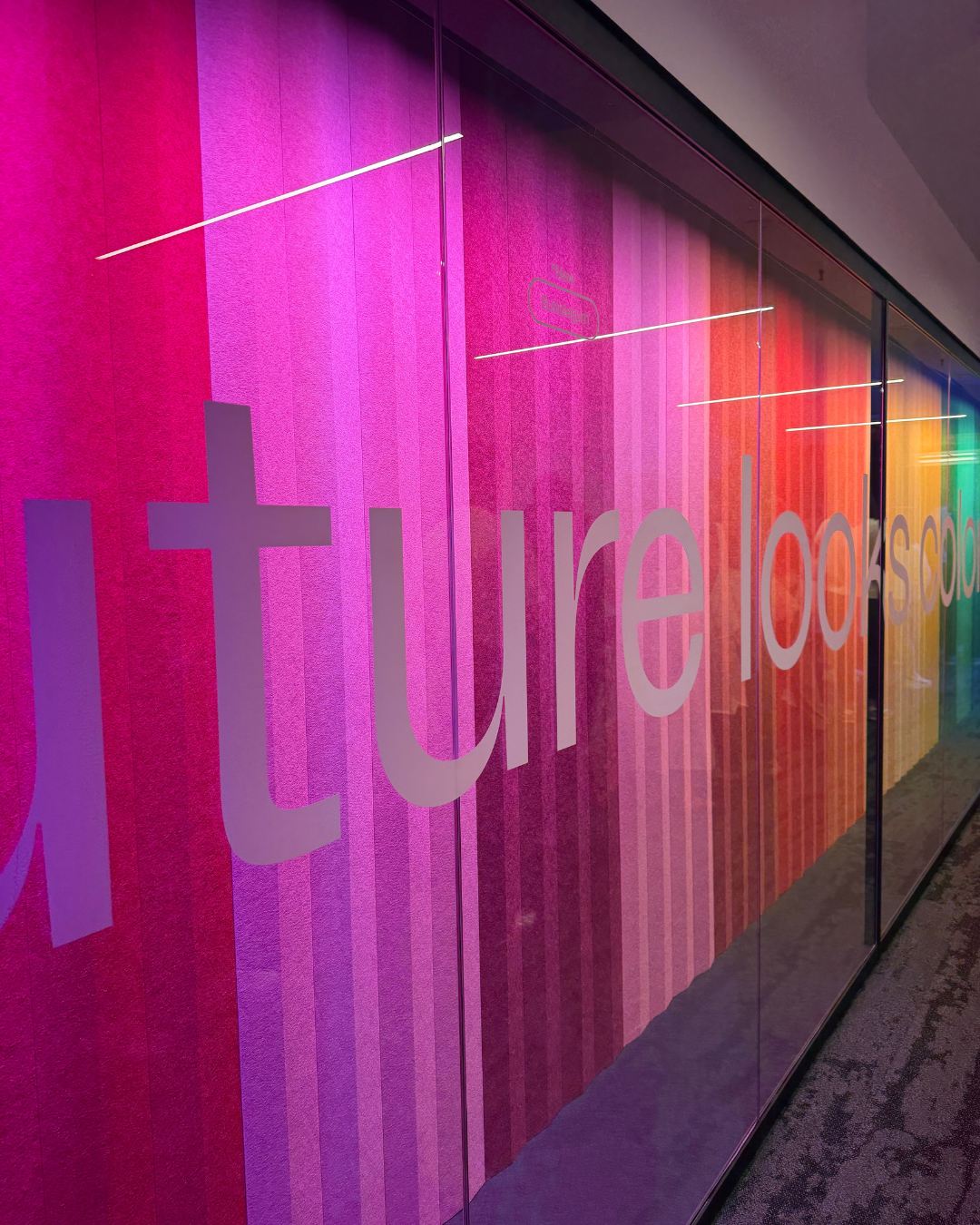
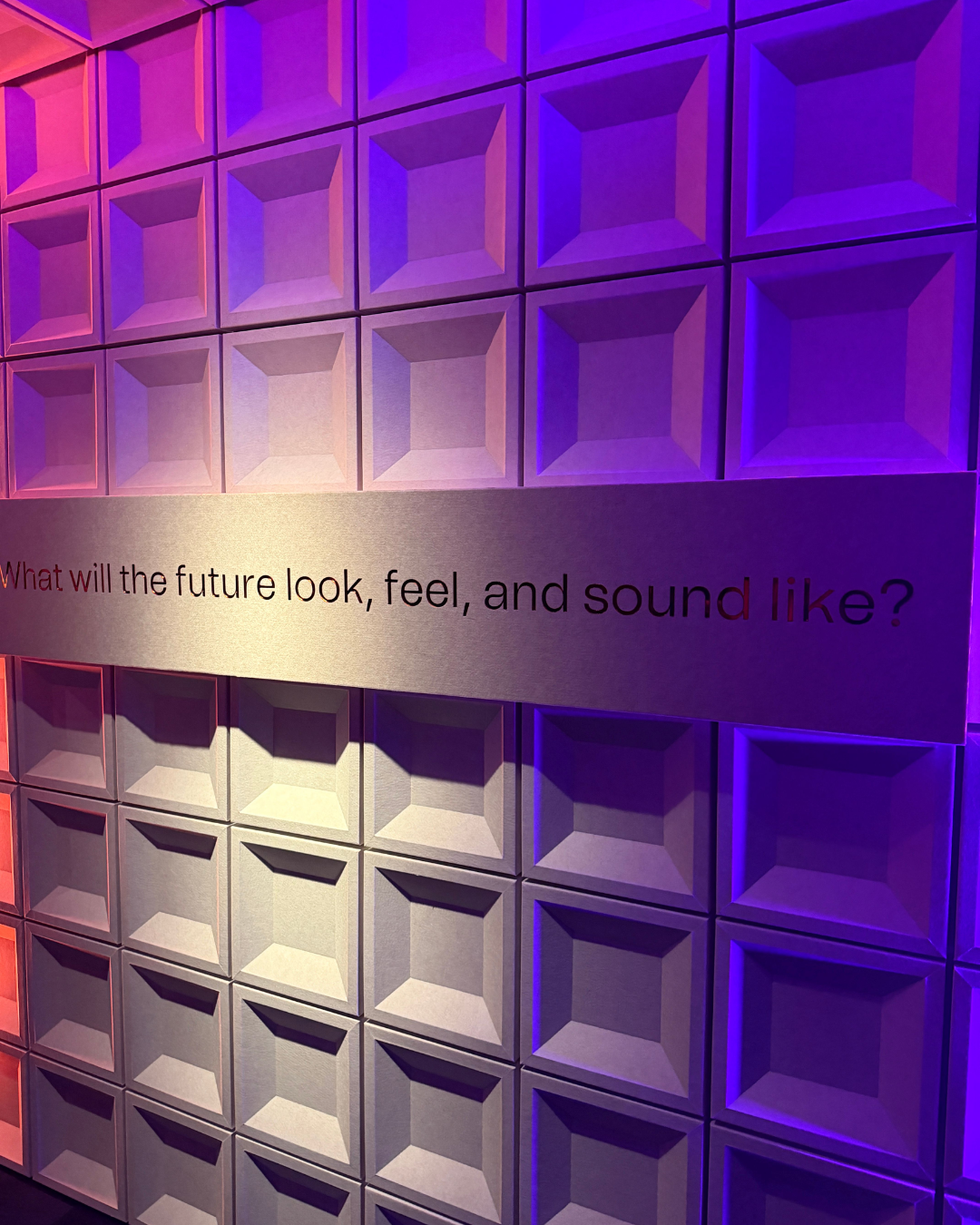
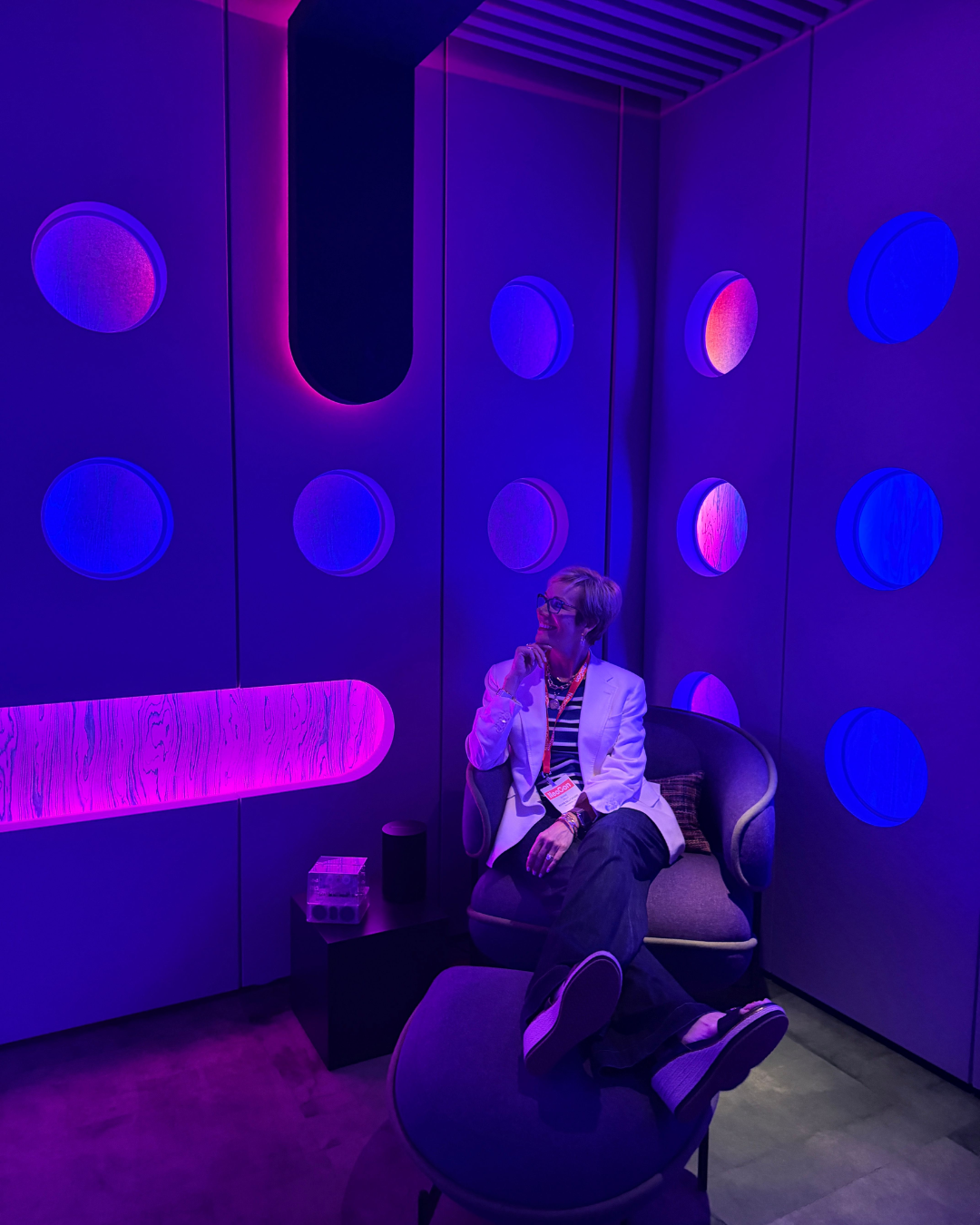
At Turf Design, acoustical systems appeared more like architectural installations than performance products, offering endless opportunities for customization. BuzziSpace continued to push boundaries with bold forms and playful applications that simultaneously manage sound and create visual impact.
As open offices, hospitality environments, and collaborative spaces continue to evolve, acoustical performance is becoming a critical component of occupant comfort. Fortunately, designers no longer have to choose between performance and beauty.
05. Innovation at the Speed of a Tap
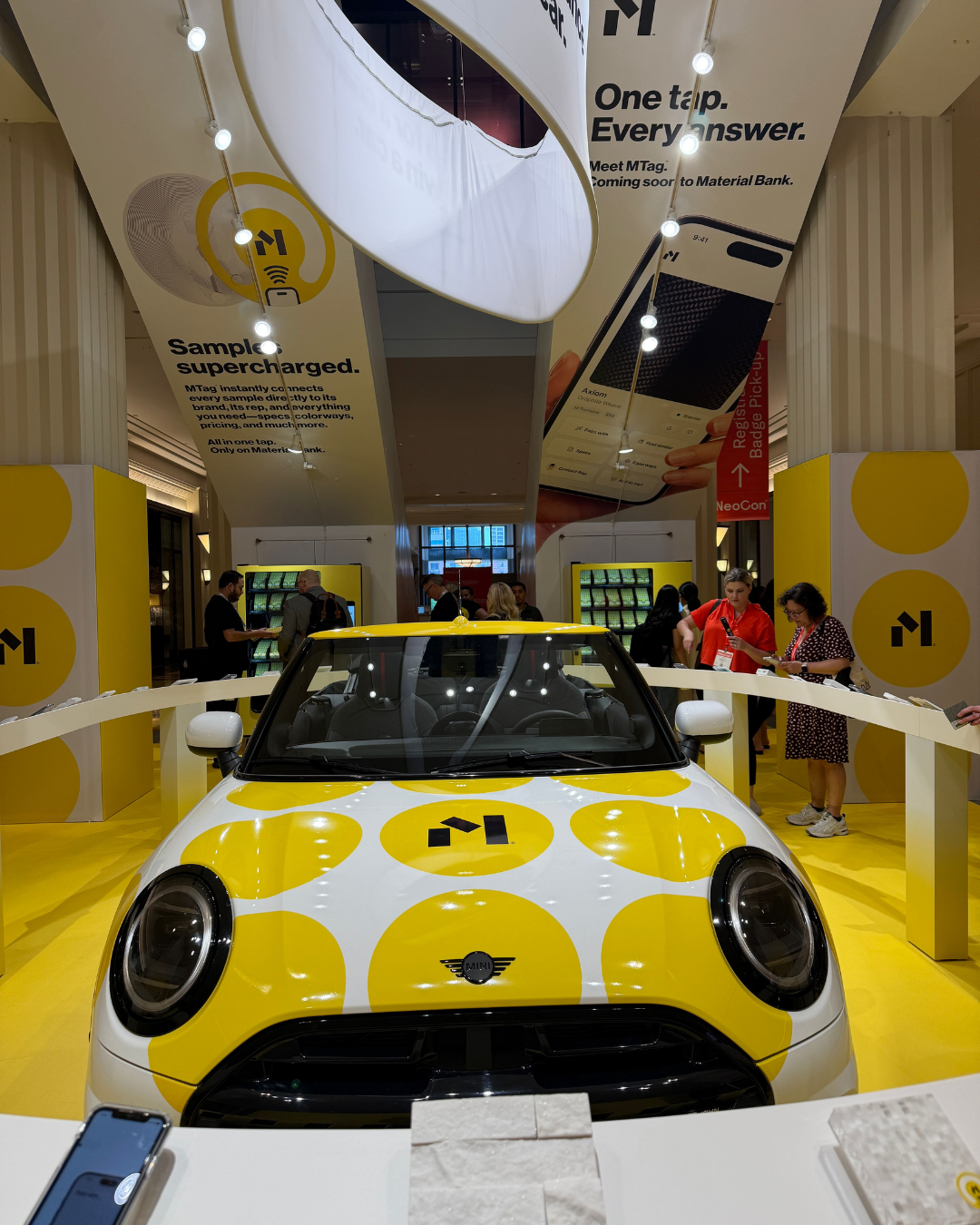
One of the most practical innovations I encountered came from Material Bank. Their new MTag technology simplifies material sourcing and specification through a simple tap of a smartphone. Imagine walking through a showroom, touching an MTag-enabled sample, and instantly accessing specifications, product information, sustainability details, and ordering resources.
For designers juggling hundreds of materials, products, and vendor relationships, the technology represents a significant step forward in streamlining workflow and reducing friction throughout the specification process.
In an industry increasingly driven by efficiency, MTag demonstrates how digital tools can enhance—not replace—the tactile experience designers value.
Final Takeaway: The Future is About the Experience
Whether through sensory-sensitive lighting, responsive workplaces, artist-driven storytelling, innovative acoustics, or smarter specification tools, NeoCon 2026 revealed a common thread. Design is becoming more human centered.
The most successful products no longer focus solely on aesthetics or performance. They create experiences. They respond to individual needs. They support well-being. They foster connection.
As designers, our greatest opportunity is no longer simply creating beautiful spaces. It is creating spaces where people feel seen, supported, inspired, and empowered to thrive.
And if NeoCon is any indication, the future looks remarkably bright.
Like what you see?
There's more where that came from.