Last month, while visiting the World of Whirlpool, I had the opportunity to spend time with JennAir’s product and design team discussing a question that every great brand should continually ask:
What is truly resonating with designers today?
As we reflected on conversations from KBIS, one moment kept resurfacing. It wasn’t a product demonstration or a feature comparison. It was the reaction people had when they opened JennAir’s Obsidian wine columns and refrigeration. Designers would pause, their expressions would change, and smiles would appear in surprise.
There was something unexpectedly beautiful about discovering a dramatic black interior. That single moment of surprise sparked a larger conversation—not just about aesthetics, but about why the experience felt so memorable in the first place. As we unpacked the thinking behind Obsidian, we found ourselves talking less about appliances and more about art, hospitality, and the timeless design principle of contrast. Suddenly, the inspiration made perfect sense.
Luxury is often associated with what we add, but some of the most memorable design experiences are created by what we choose to place around something—and that’s what inspired JennAir’s Obsidian Interior.
For centuries, artists, chefs, and jewelers have understood the power of contrast.
The Dutch Masters frequently painted against deep, dark backgrounds, allowing fruit, florals, silver, and glass to emerge with remarkable richness. The darkness wasn’t the subject—it was the tool that made the subject more beautiful.
Today, that same principle can be found in an unexpected place: inside a refrigerator.
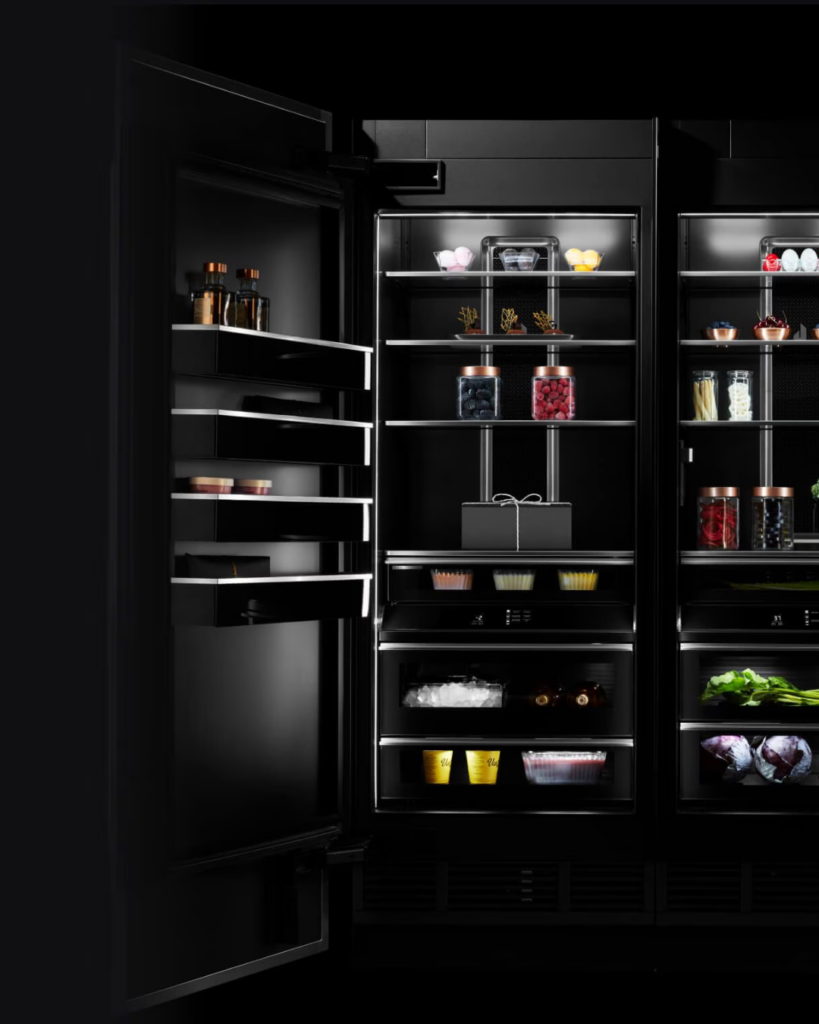

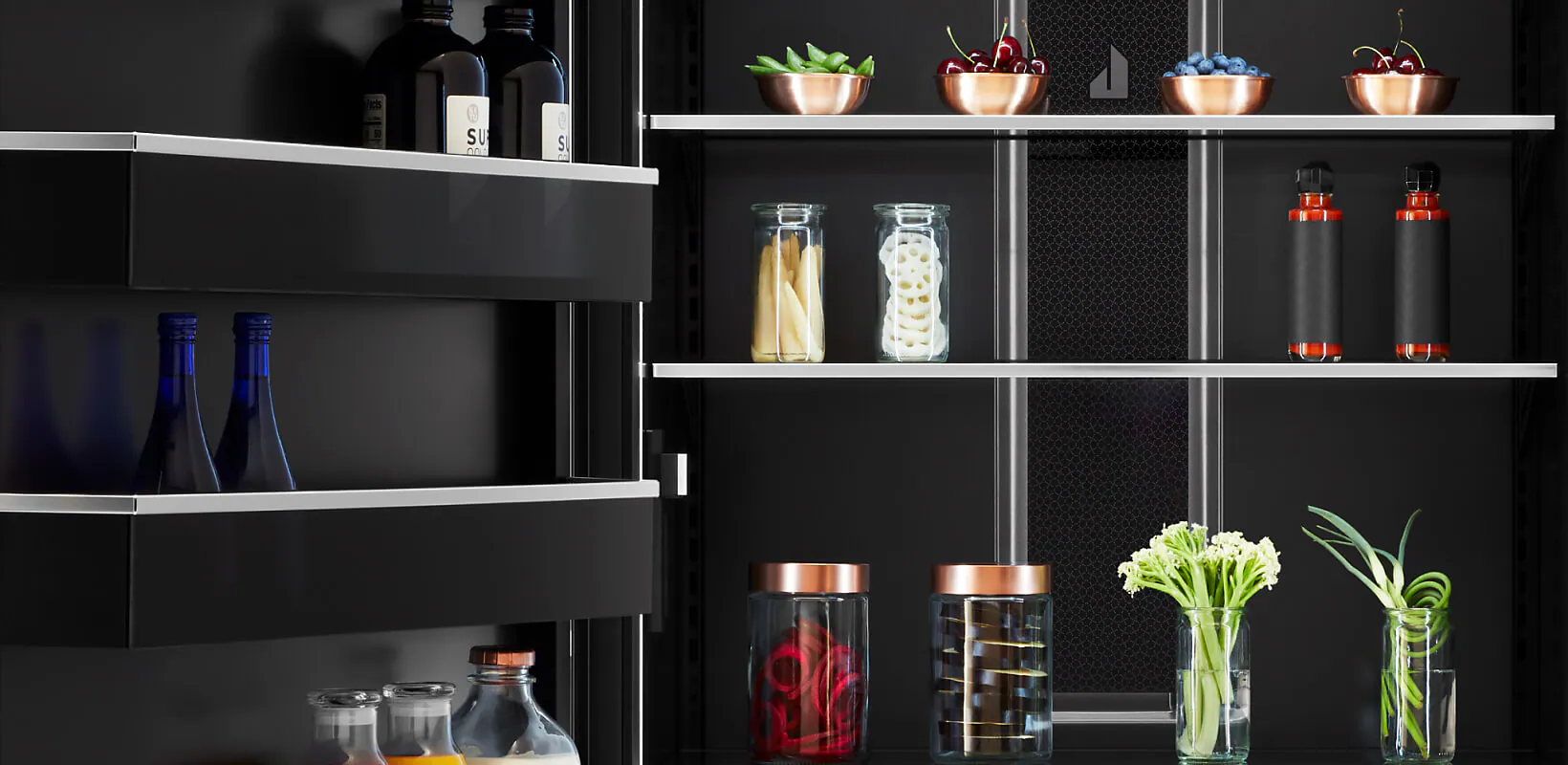
JennAir’s Obsidian interior challenges the longstanding expectation that refrigeration should be bright white. Instead, the dark interior creates a dramatic backdrop that allows ingredients to become the focal point. Produce appears more vibrant. Glass bottles catch the light differently. Everyday items feel elevated simply through presentation.
The effect feels familiar because we’ve experienced it before.
In Michelin-starred restaurants, chefs often plate their creations on dark surfaces to draw attention to color, texture, and detail. The plate itself fades into the background, allowing the ingredients to command attention.
The experience isn’t about the plate. It’s about what the plate allows us to see. The same is true inside the Obsidian refrigerator. Fresh ingredients become more visually compelling. A beautifully stocked refrigerator feels less like storage and more like curation.
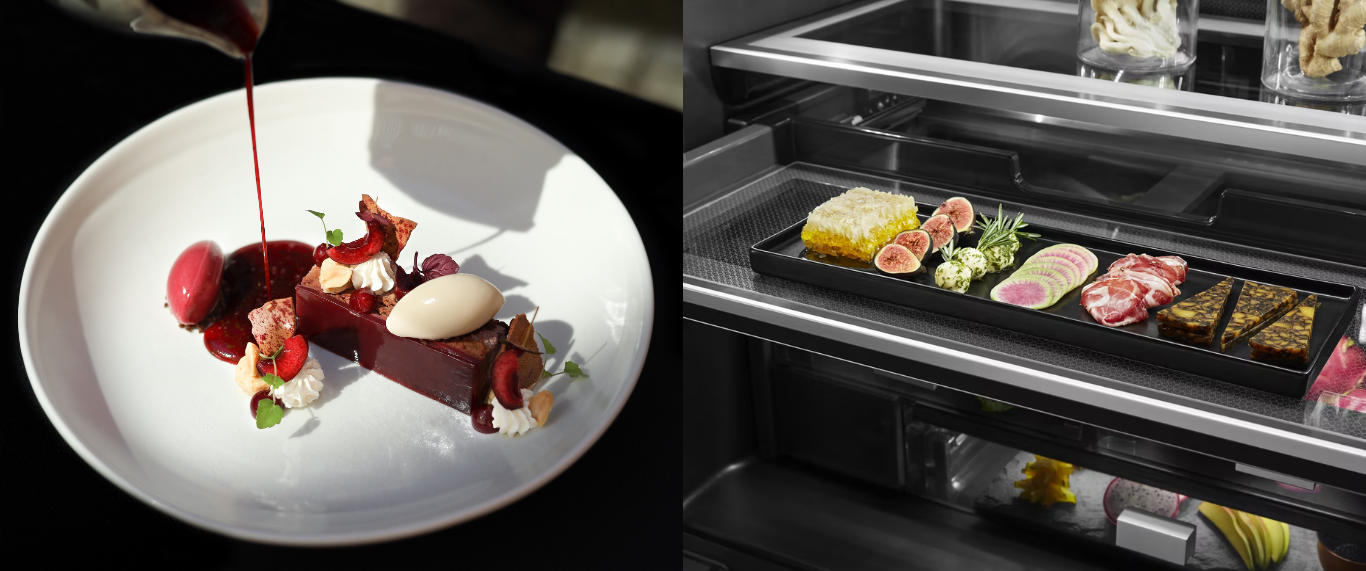
There is also something undeniably reminiscent of opening a fine jewelry box.
Luxury jewelry is rarely presented against a bright white backdrop. Instead, dark velvet and suede create contrast, anticipation, and a sense of value. The contents feel more intentional because of the environment surrounding them.
That emotional response is what makes Obsidian so compelling. It transforms a routine interaction into a moment of discovery. And perhaps that is the real design lesson.
The most thoughtful luxury products aren’t always the ones that ask for attention. Often, they are the ones that quietly frame the experience, allowing everything else to shine.
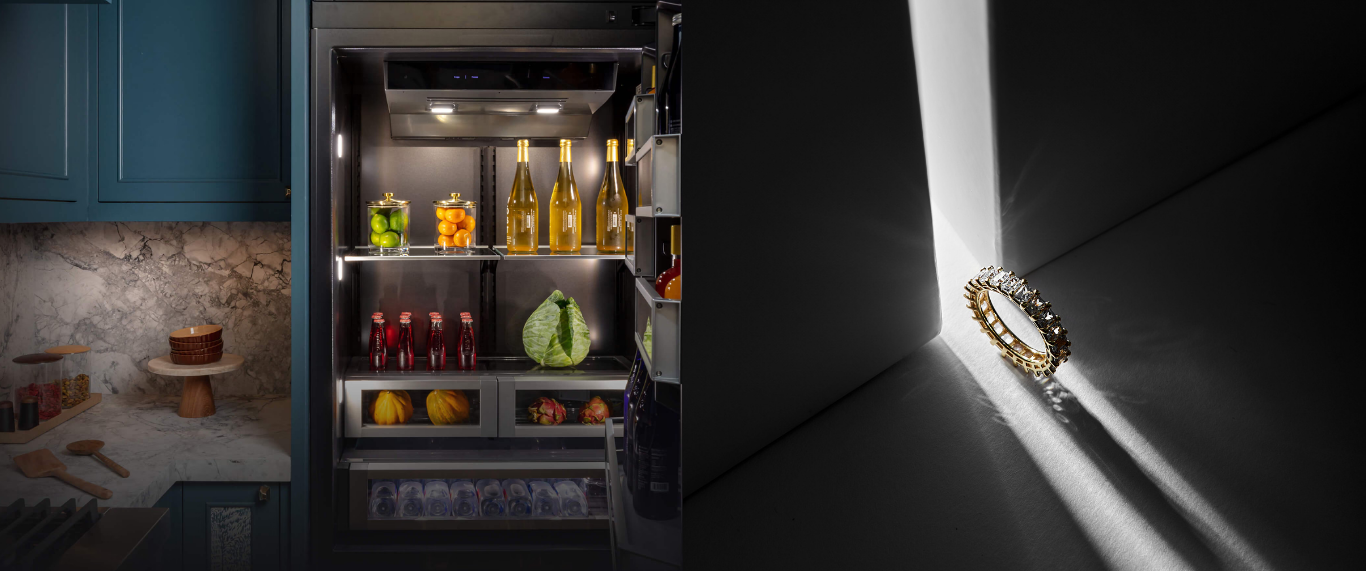

Like a Dutch Master painting, a Michelin-starred presentation, or a treasured jewelry box, JennAir’s Obsidian interior reminds us that great design isn’t only about what we see.
It’s about how we choose to reveal it.
Discover more eye candy for the kitchen at JennAir.com.
Like what you see?
There's more where that came from.